
(This note was emailed to all invitees from D E&C account, and via DS Sec to Royal Household invitees.)
SSROB18 KEY MESSAGES
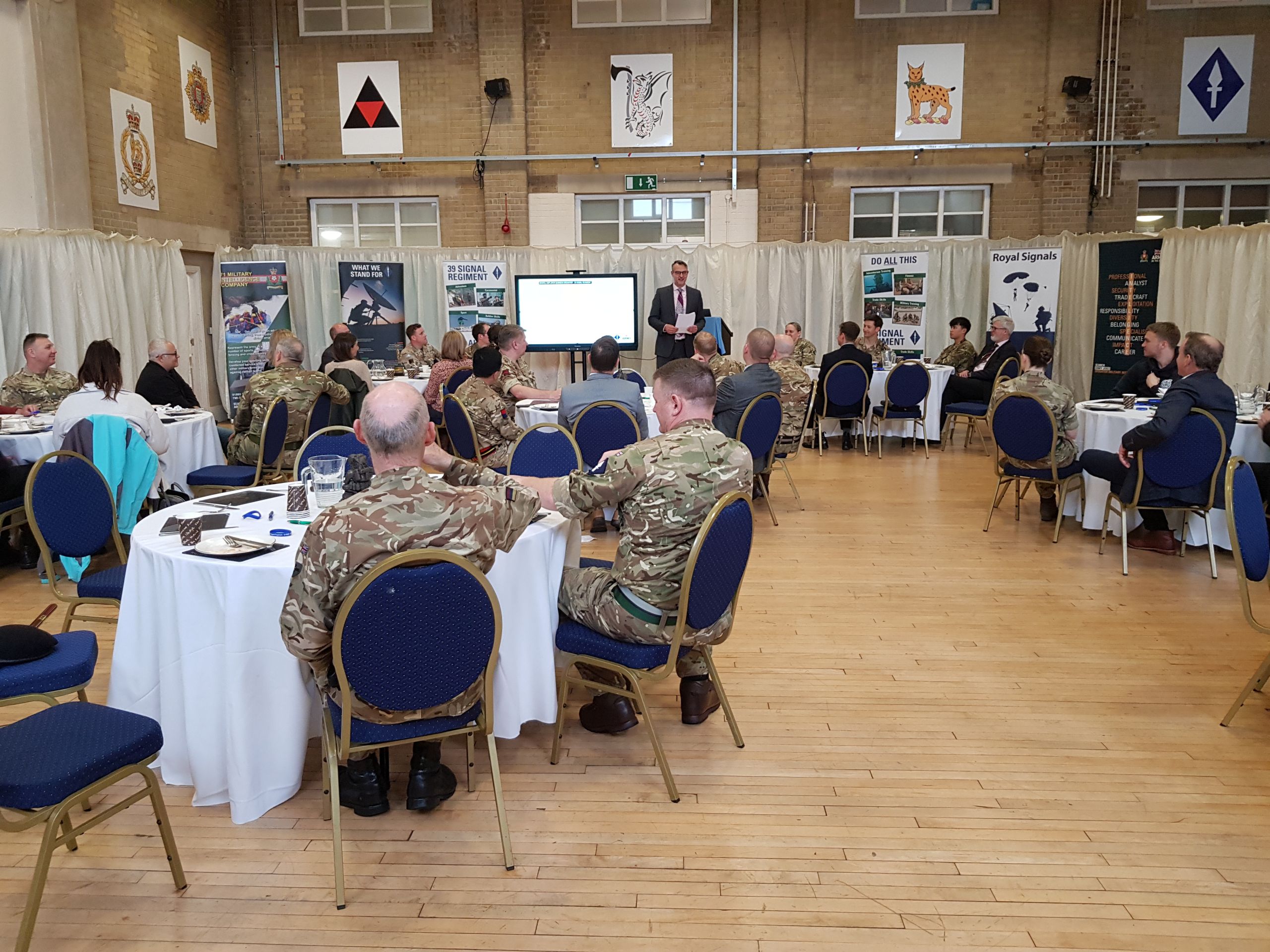
It was great to see so many of you at CGS’s first annual briefing to the senior retired officer and Regimental Colonel community. I hope that you found it an enjoyable and informative morning. For those who were unable to make it, the briefings outlined the current strategic context, challenges faced by the Army, and CGS’s top priorities. You provide a powerful voice in public discourse about the Army and I know CGS would greatly appreciate support in relaying some key messages, where you feel able:
- The rules based order faces unprecedented challenge, not least given continuing political fragmentation in the Middle East, US-Sino relations characterised by competition, the threat posed by North Korea, and Russia’s continuing testing of NATO’s flanks with sub-threshold activity.
- Despite not having a single large operation to grab the headlines, the Army is as busy as ever. In 2017 more than 50,000 soldiers deployed on overseas commitments in 55 countries. Today, we have over 3,300 troops deployed on 25 operations, nearly 6,000 on overseas training exercises and we are supporting a further 25 training missions around the globe.
- Although there are about 82,500 personnel in the Army in total, we need to improve the current c.76,500 fully-trained strength; achieving this is will require an improvement to inflow (recruiting) and outflow (retention). With record youth employment levels and a shrinking 18-24 year old demographic, the Army is in a highly competitive recruiting market. However, the Army has defined the challenge and has a credible, resourced plan to improve the situation. Last year, not least due to Capita’s successful ‘Belonging’ advertising campaign – the Army received c.100,000 applications; a 5-year high. Not enough applications are, however, being converted into trained soldiers, in no small part due to the length of the application process; a pilot is demonstrating how this process can be shortened very considerably. Conversion rates have already improved form c. 10:1 to 7:1. We are doing a great many other things too, including modernising elements of our entry criteria, but we are absolutely not lowering our entry standards, contrary to some of the reporting. On a really positive note, officer recruiting is going extremely well and Sandhurst is currently full.
- We all have work to do to debunk the myth that future conflicts can be won by drones and Special Forces. It remains the case that winning will still ultimately be decided by men and women on the ground. And we must explain that this carries risk and that wars cannot be won free of casualties.
- We must secure the necessary resource to upgrade our aging equipment fleet. We simply cannot send our soldiers into combat in vehicles that have not been upgraded properly for 30 years. If we do not invest in our equipment programme, we will not keep pace with our principal alliesand risk being out-matched by our adversaries.
- After years of continual change the Army needs to consolidate and stabilise. We will focus on fit-for-purpose infrastructure to ensure a sustainable footprint for the future, whilst optimising the training base to develop in our people the necessary agility, adaptability and flexibility with which to meet the future challenges.
Next year’s briefing will take place on Tuesday 29 October 2019. We very much hope to see you there. In the meantime, I’d like to highlight the new termly Army newsletter ‘In Front’, which provides an update on a number of initiatives, including training, infrastructure, experimentation and the Army’s new fitness assessments. It can be found on the British Army website by following this link, and I hope will provide you with some interesting reading.
Please do not hesitate to get in touch should you need further detail. Thank you very much indeed for your continued support.